
What Does Customization or White-Labeling Mean for Organizations?
Customization and white-labeling can help organizations scale smarter.
From adapting a solution to fit your specific needs to putting your own brand identity on the experience, the right approach can make a real difference in how your business operates and grows.
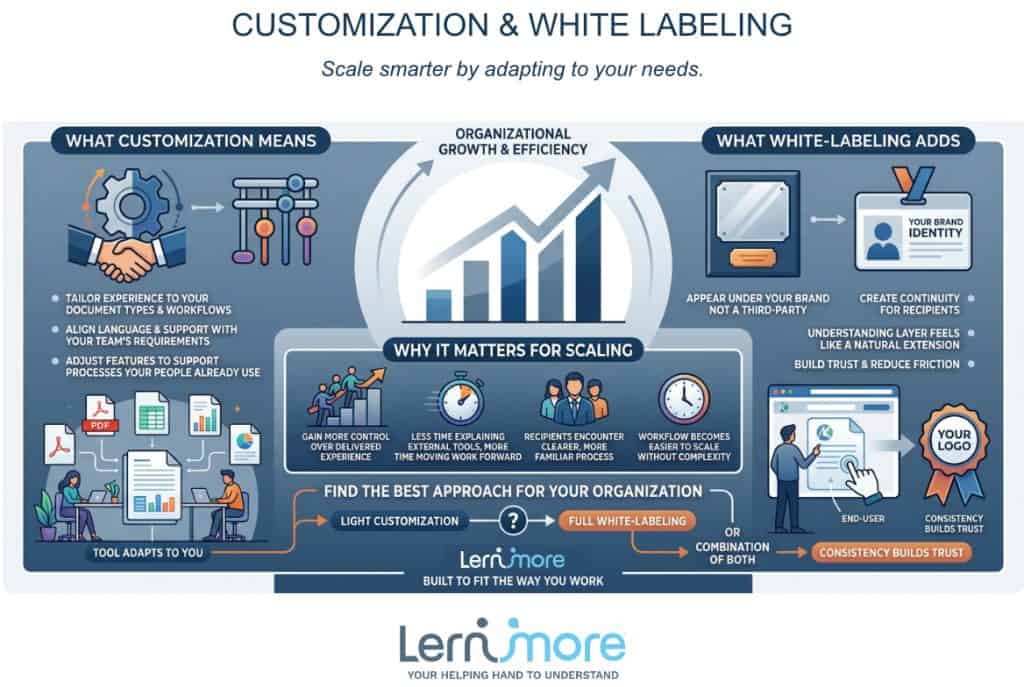
What Customization Actually Means
Customization means the platform can be shaped around the way your organization already works.
This can include:
- Tailoring the experience to your document types and workflows
- Aligning language, explanations, and support tools with your team’s requirements
- Adjusting features so they support the processes your people already use
Instead of forcing your team to adapt to a rigid tool, the tool adapts to you.
What White-Labeling Adds
White-labeling takes it a step further. It allows the experience to appear under your brand rather than someone else’s.
For recipients, this creates continuity. The understanding layer feels like a natural extension of the service you already provide, not a separate third-party platform. That consistency builds trust and reduces friction.
Why It Matters for Scaling
When a solution can be both customized and white-labeled, organizations gain more control over the experience they deliver. Teams spend less time explaining external tools and more time moving work forward. Recipients encounter a clearer, more familiar process and the overall workflow becomes easier to scale without adding complexity.
The key is finding the approach that works best for your organization, whether that means light customization, full white-labeling, or a combination of both.
Built to Fit the Way You Work
At LernMore, customization and white-labeling are designed to support the workflows organizations already have in place. The goal is simple: make document understanding feel like part of the experience you provide, not an extra step layered on top.
Interested in how this could work for your team?
Book a LernMore demo
LernMore provides educational support and is not a substitute for legal advice. Always consult a qualified professional for advice specific to your situation.